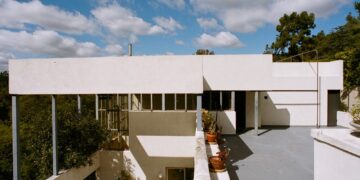


The Lovell Health House, situated in Los Angeles, California, is a significant architectural landmark in the history of modern architecture. Completed in 1929, it was designed by renowned architect Richard Neutra and is considered one of the earliest examples of International Style architecture in the United States. The house was commissioned by Philip Lovell, a naturopath and health advocate, who desired a home that reflected his beliefs in healthy living and modern technology.
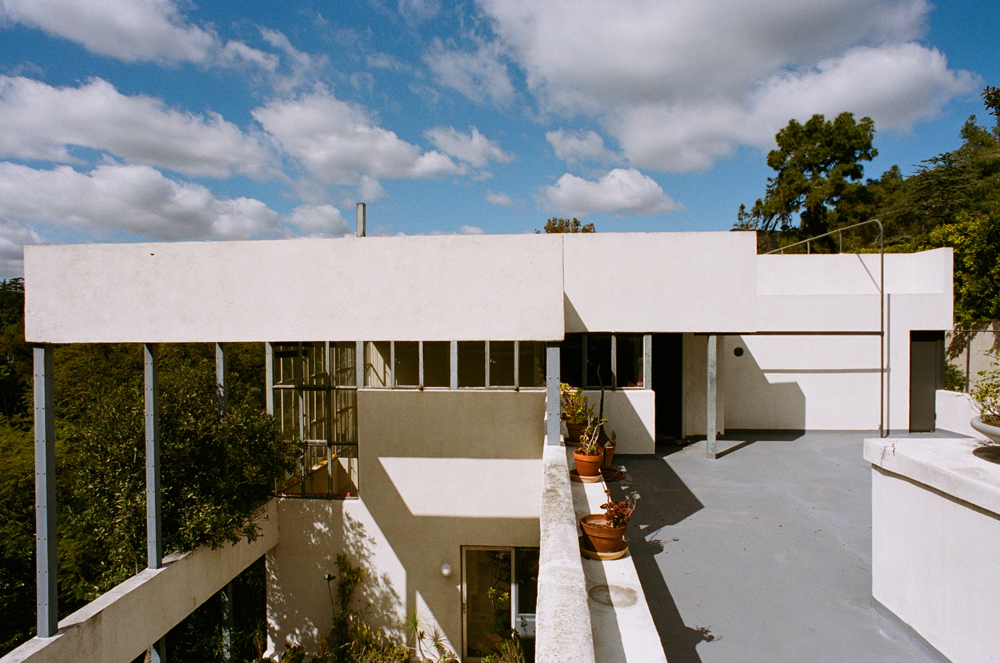
The Lovell Health House was a pioneering project that advanced architectural design and engineering, establishing new standards for residential architecture. Its design challenged traditional residential architecture concepts. It was created to integrate with the surrounding natural environment, featuring large windows and open spaces that maximized natural light and ventilation.
Neutra’s use of innovative materials such as steel, glass, and concrete demonstrated his commitment to modernism and his belief in technology’s potential to enhance the quality of life. The house represented a significant departure from contemporary architectural styles, and its influence on the field of architecture was substantial. Today, the Lovell Health House stands as a testament to Neutra’s visionary approach to design and his ability to create functional and visually striking spaces.
Key Takeaways
- The Lovell Health House was designed by architect Richard Neutra in 1929 for the Lovell family in Los Angeles, California.
- The house is known for its innovative architectural features, including a cantilevered design, glass walls, and an open floor plan.
- The Lovell Health House reflects modernism’s influence with its emphasis on functionality, simplicity, and the use of new materials such as steel and glass.
- The house incorporates innovative design elements such as a rooftop garden, a central heating and cooling system, and a focus on natural light and ventilation.
- The Lovell Health House’s sustainable and health-focused design includes features such as passive solar heating, natural ventilation, and a connection to the surrounding landscape.
The Architectural Features of the Lovell Health House
The Influence of Modernism on the Lovell Health House
The Lovell Health House is a quintessential example of modernist architecture, which emerged in the early 20th century as a response to the social and technological changes brought about by industrialization. Modernist architects sought to break free from historical styles and create a new architectural language that reflected the spirit of the times. The International Style, which the Lovell Health House exemplifies, emphasizes simplicity, functionality, and a rejection of ornamentation.
Industrial materials such as steel, glass, and concrete were central to the modernist ethos, as was an emphasis on open floor plans and a seamless integration of indoor and outdoor spaces. The influence of modernism on the Lovell Health House can be seen in its clean lines, geometric forms, and emphasis on functionality. The house was designed to be a machine for living, with an efficient layout and a focus on rationality and order.
Industrial materials and innovative construction techniques reflected modernism’s embrace of technology and its belief in progress. The house’s integration with its natural surroundings also reflected modernism’s interest in creating a harmonious relationship between humans and their environment. The Lovell Health House was a pioneering example of modernist architecture in America and played a significant role in shaping the trajectory of residential design in the 20th century.
The Innovative Design Elements of the Lovell Health House
| Design Element | Description |
|---|---|
| Integration with Nature | The house is designed to blend with its natural surroundings, with large windows and open spaces connecting the interior with the exterior. |
| Use of Concrete | The house features innovative use of concrete, including cantilevered balconies and thin concrete walls, showcasing the material’s versatility. |
| Open Floor Plan | The interior layout is characterized by an open floor plan, allowing for flexible use of space and a sense of openness. |
| Passive Solar Design | The house incorporates passive solar design principles, maximizing natural light and heat gain to reduce energy consumption. |
| Modular Construction | The use of modular construction techniques allowed for efficient and cost-effective building methods, contributing to the innovative design of the house. |
The Lovell Health House was a groundbreaking project that incorporated several innovative design elements ahead of its time. One of the most notable features of the house was its use of steel framing, which allowed for large expanses of glass and an open floor plan. This created a sense of spaciousness and connectivity and blurred the boundaries between indoor and outdoor spaces.
The house’s cantilevered design gave it a sense of weightlessness and dynamism, while its flat roof and clean lines reflected the influence of the International Style. The integration of these design elements made the Lovell Health House a pioneering example of modern residential architecture. In addition to using steel framing and glass, the Lovell Health House also incorporated cutting-edge technology into its design.
The house was equipped with radiant heating, a built-in vacuum system, and a central air conditioning system, which were rare in residential architecture at the time. These modern amenities demonstrated Neutra’s forward-thinking approach to architecture and his belief in the potential of technology to improve the quality of life. The house also featured sustainable design principles such as passive solar heating and natural ventilation, revolutionary concepts in the 1920s.
Combining these innovative design elements made the Lovell Health House a trailblazing example of modern residential design and solidified Neutra’s reputation as a visionary architect.
The Sustainable and Health-focused Design of the Lovell Health House
The Lovell Health House was designed strongly to emphasize sustainability and health-focused living, reflecting Philip Lovell’s beliefs as a naturopath and health advocate. The house incorporated several sustainable design principles that were ahead of their time, including passive solar heating and natural ventilation. These features reduced the house’s environmental impact and created a healthy indoor environment for its occupants.
Integrating these sustainable design elements demonstrated Neutra’s commitment to creating spaces that promote well-being and harmony with nature. In addition to its sustainable design features, the Lovell Health House also prioritized health-focused living through its innovative layout and use of natural materials. The house was organized around a central courtyard, which served as a focal point and brought natural light into the heart of the home.
This created a sense of spaciousness and connectivity and promoted a connection to nature. Natural materials such as wood and stone enhanced the house’s connection to its natural surroundings and created a warm and inviting living environment. Integrating these sustainable and health-focused design elements made the Lovell Health House a pioneering example of residential architecture prioritizing well-being and environmental responsibility.
The Legacy of the Lovell Health House in Modern Architecture
Exploring the Lovell Health House: A Must-See Architectural Gem
The Lovell Health House is a must-see architectural gem that continues to captivate visitors with its innovative design and timeless appeal. Situated on a steep hillside in Los Angeles, the house offers stunning views of the surrounding landscape and provides a unique opportunity to experience Neutra’s visionary approach to residential architecture. Visitors can explore the house’s open floor plan, seamless integration with nature, and cutting-edge technology, gaining insight into its significance as a pioneering example of modernist design.
A visit to the Lovell Health House offers an opportunity to appreciate its clean lines, minimalist aesthetic, and emphasis on functionality, which continue to inspire architects and designers today. The house’s sustainable design features, including passive solar heating and natural ventilation, provide valuable lessons for creating environmentally responsible living spaces. Exploring the Lovell Health House allows visitors to understand its legacy in modern architecture and its ongoing relevance in today’s context.
As a testament to Neutra’s visionary approach to design, the Lovell Health House remains an essential destination for anyone interested in experiencing one of the most influential examples of modern residential architecture.
FAQs
What is the Lovell Health House?
The Lovell Health House is a historic residence in Los Angeles, California. Designed by architect Richard Neutra and built in 1929-1930, it is a landmark building.
What makes the Lovell Health House significant?
The Lovell Health House is a significant example of modernist architecture in the United States. It is known for its innovative design and use of new materials during its construction.
Who commissioned the Lovell Health House?
The Lovell Health House was commissioned by Philip Lovell, a naturopath and health food advocate, who wanted a home that reflected his beliefs in healthy living and modern technology.
What are some notable features of the Lovell Health House?
The Lovell Health House features an innovative cantilevered design, glass walls, and an open floor plan. It also incorporates passive solar heating and cooling systems.
Is the Lovell Health House open to the public?
The Lovell Health House is a private residence and is not generally open to the public. However, it has been featured in architectural tours and publications.
Is the Lovell Health House listed on any historic registers?
Yes, the Lovell Health House is listed on the National Register of Historic Places and is recognized as a Los Angeles Historic-Cultural Monument.